A flat tire can happen at any time, whether you are driving to work, running errands, or travelling on the highway. A puncture, damaged tire, or sudden loss of air pressure can make your vehicle difficult or unsafe to control.
If you experience a flat tire in Marysville, Washington, knowing what to do next can help you protect yourself, avoid additional vehicle damage, and get back on the road safely.
1. Slow Down and Find a Safe Place to Stop
If you notice that your tire has lost pressure, your steering feels unusual, or your vehicle begins to pull to one side, avoid sudden braking or sharp turns.
Slow down gradually, maintain control of the steering wheel, and move to a safe stopping location if possible.
Turn on your hazard lights once you have stopped. If you are on a busy highway, avoid changing the tire beside moving traffic.
Important: Driving on a completely flat tire can damage the wheel and make the vehicle harder to control. Stop as soon as it is safe.
2. Check Whether It Is Safe to Change the Tire
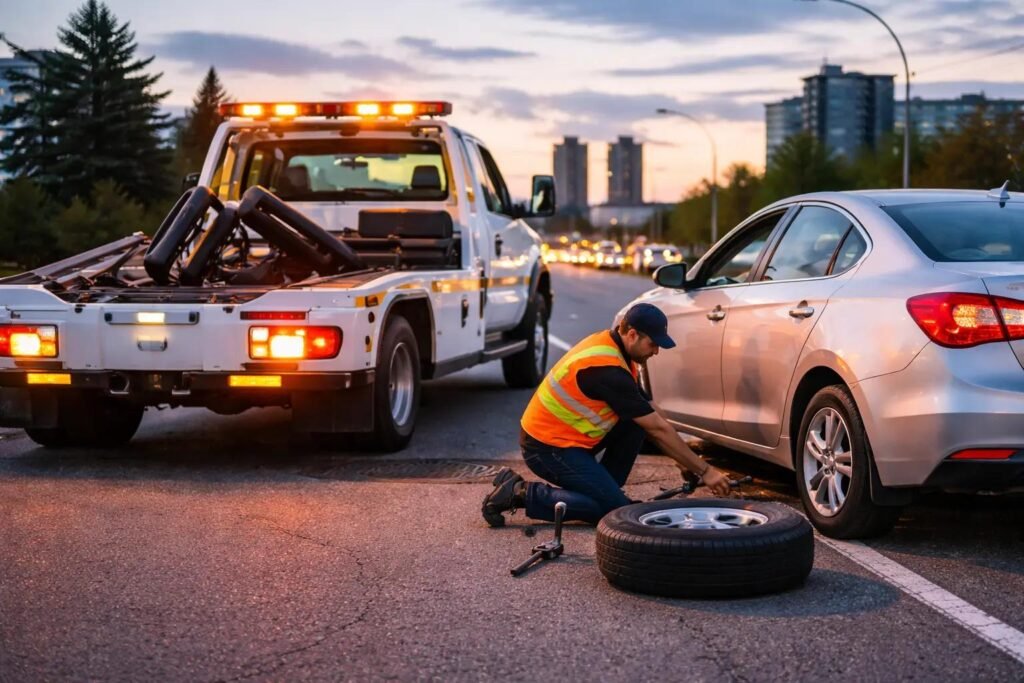
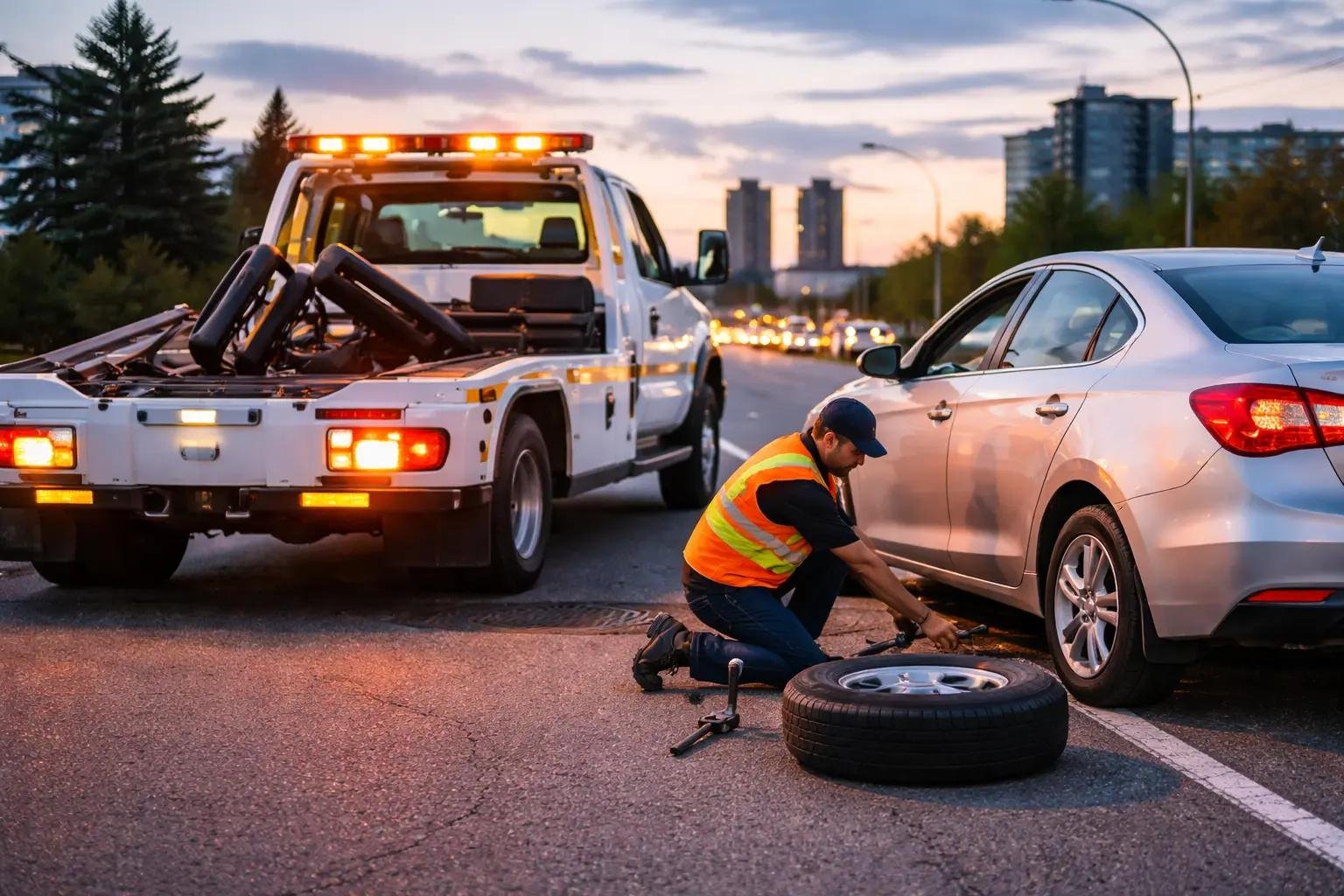
Some vehicles carry a spare tire and the tools needed for a replacement. However, changing a tire is not always a safe roadside option.
Before attempting a tire change, consider:
- Is your vehicle completely away from moving traffic?
- Is the ground level and stable?
- Do you have the correct tools and a suitable spare tire?
- Can you follow your vehicle manufacturer’s instructions safely?
- Are weather and visibility conditions suitable?
Never attempt to change a tire in a live traffic lane or on an unstable surface. Never place any part of your body under a vehicle supported only by a jack.
If the location is unsafe or you are unsure how to change the tire, contact a professional roadside assistance provider.
3. Understand the Common Causes of Flat Tires
Knowing what may have caused the flat can help you explain the problem when requesting assistance.
Punctures from Nails or Sharp Objects
Nails, screws, and other sharp objects can puncture a tire and cause air to escape. Some punctures develop slowly, while others lead to rapid pressure loss.
Worn or Damaged Tires
Tires with excessive wear, cracks, bulges, or other damage may be more likely to fail. Regular inspections can help identify visible problems before a journey.
Low Tire Pressure
Driving with incorrect tire pressure can affect handling and contribute to tire damage. Check pressure according to the manufacturer’s recommended specifications.
Road Hazards
Potholes, debris, and impacts against curbs can damage tires and sometimes wheels.
If a tire has a sidewall bulge, a large cut, or severe damage, do not assume it can be repaired. A qualified tire professional should assess it.
4. When Should You Call a Tow Truck for a Flat Tire?
A tow truck or roadside assistance service may be the best option when:
- You do not have a spare tire.
- Your spare is also flat or damaged.
- The vehicle is stopped in an unsafe location.
- The tire or wheel has severe damage.
- You lack the tools or experience to change the tire.
- More than one tire is damaged.
- The vehicle cannot be moved safely.
Depending on the damage and available equipment, the appropriate solution may be a roadside tire change, tire service, or towing to a repair facility.
When you call, explain your location, vehicle type, tire condition, and whether you have a usable spare. Ask about the available service and any expected charges.
5. Why Local Roadside Assistance Can Help
When you have a flat tire, finding appropriate help can save time and reduce the risk of attempting an unsafe repair.
Ali’s Towing serves Marysville, Washington, and surrounding areas with towing and roadside assistance services. Depending on availability and your specific situation, you can ask about tire-change assistance or towing if the vehicle cannot be driven safely.
Share your exact location and describe the problem clearly when contacting the company. If you are on a highway, provide the road name, direction of travel, nearest exit, or a safe landmark when possible.
6. How to Prevent Flat Tires
Although no tire is completely protected against road hazards, regular checks can reduce avoidable problems.
Follow these simple maintenance tips:
- Check tire pressure regularly, including the spare if your vehicle has one.
- Inspect the tread and sidewalls for visible damage.
- Replace tires that have reached their service limits.
- Avoid driving over potholes and road debris when it is safe to do so.
- Keep the recommended tire pressure information available.
- Make sure your vehicle’s spare tire and emergency tools are in usable condition.
If your tire pressure monitoring system displays a warning, investigate the cause instead of repeatedly resetting the warning without checking the tire.
7. What Information Should You Provide When Calling for Help?
Giving clear information can help a towing or roadside assistance provider determine the appropriate response.
Be prepared to share:
- Your current location.
- Your vehicle’s make, model, and approximate size.
- Whether the tire is completely flat or visibly damaged.
- Whether a spare tire is available.
- Whether your vehicle is blocking traffic or in another unsafe position.
- Your preferred destination if towing is required.
Confirm the service type, estimated arrival time, and price before proceeding whenever circumstances allow.
Need Flat Tire Assistance in Marysville, WA?
A flat tire does not have to turn a routine trip into a bigger problem. Stop somewhere safe, avoid driving on a damaged tire, and get professional help when a roadside repair is not safe or practical.
Ali’s Towing provides towing and roadside assistance in Marysville, WA, and surrounding areas. Contact Ali’s Towing to discuss your flat tire, ask about available assistance, and determine the best next step for your vehicle.
Need help with a disabled vehicle? Contact Ali’s Towing for towing and roadside assistance.